How to choose the perfect ski helmet?
Snow helmets have become over the years an absolute must in terms of safety and style on the slopes, and come in all shapes and sizes. Downhill skiing, ski touring, freeride, competition: how to choose your ski helmet? Here’s an overview (size, weight, technology, ventilation, standards, etc.) of what to keep in mind when choosing the helmet most suited to your personal needs and style.
Buy our ski helmets
Three types of helmets
You may want to jump on styles and colours, but your selection should really start with the build of your headwear. Are you looking for the lightest possible ski helmet? Or do you want to put more emphasis on your protection for competition? Introducing the three different builds you’ll have to choose from.
+ ABS helmets: safety and reliability
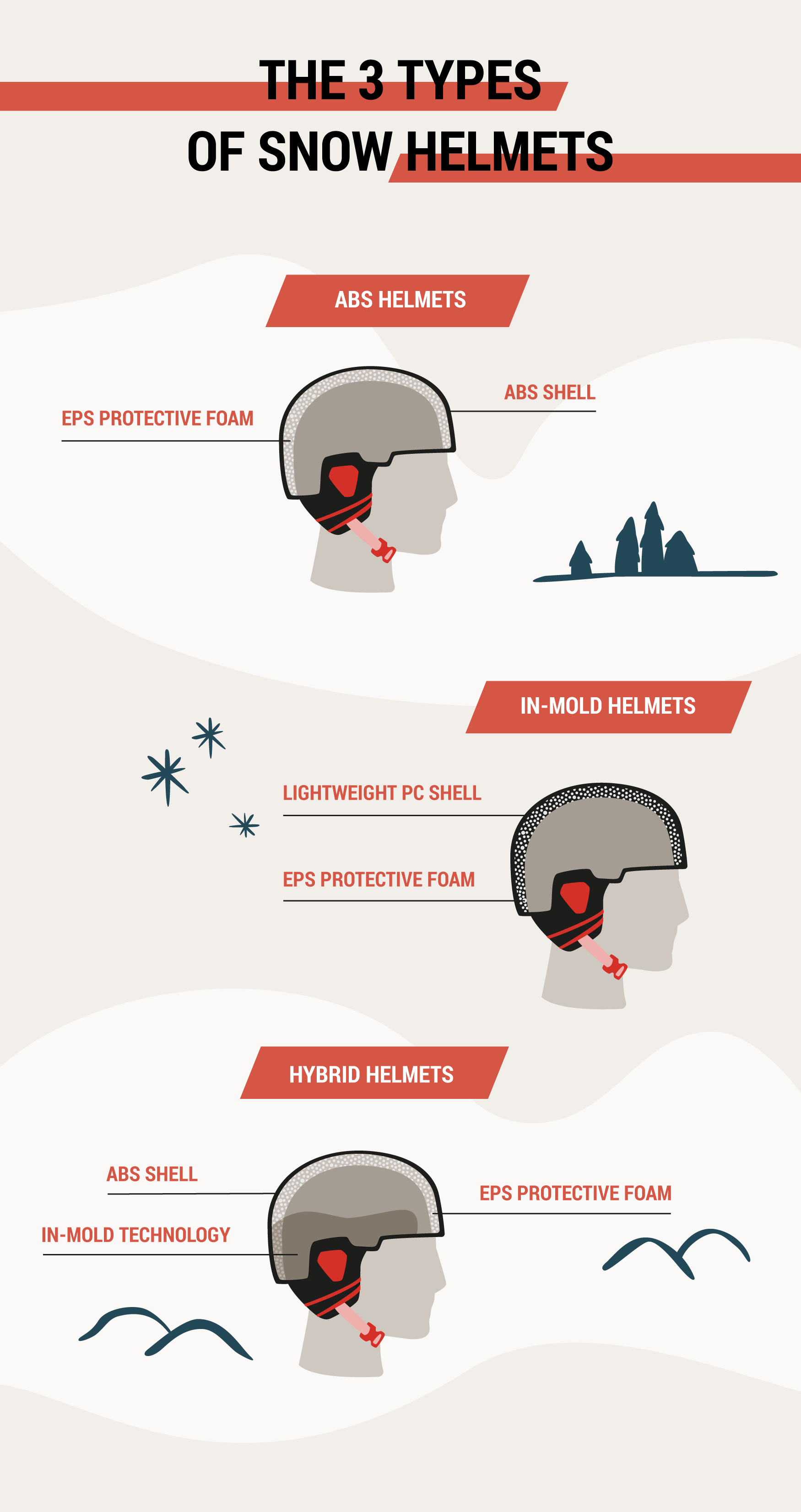
Behind the abbreviation ABS hides a thermoplastic, Acrylonitrile Butadiene Styrene. ABS ski helmets are made up of two independent parts. On the outer layer is a shell made of ABS, and underneath the hard protective foam in EPS. The two pieces that make up the helmet are glued together. EPS has the advantage of being extremely light since it is 95% air and 5% plastic. Although solid, EPS is deformable and it is therefore this hard foam that will absorb the shock in the event of a fall.
Skiers who want to focus on safety and reliability will turn to ski helmets equipped with ABS technology, such as the Medalist and Mute helmets.
+ In-Mold ski helmets: lightness and ventilation
In-Mold technology gives the ski helmet great lightness. Unlike an ABS helmet, the In-Mold ski helmet is composed of a single piece. The product stands out for its lightness and excellent ventilation. At Bollé, Motive and Instinct helmets both benefit from In-Mold technology.
+ Hybrid ski helmets: the best of both worlds
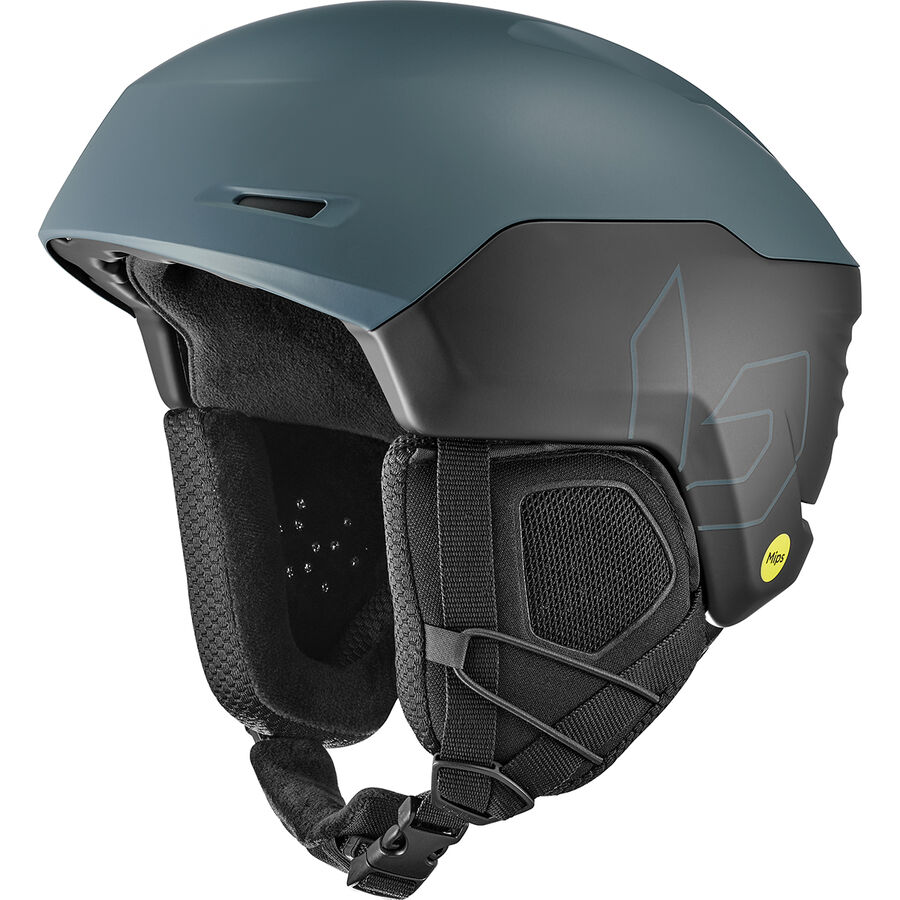
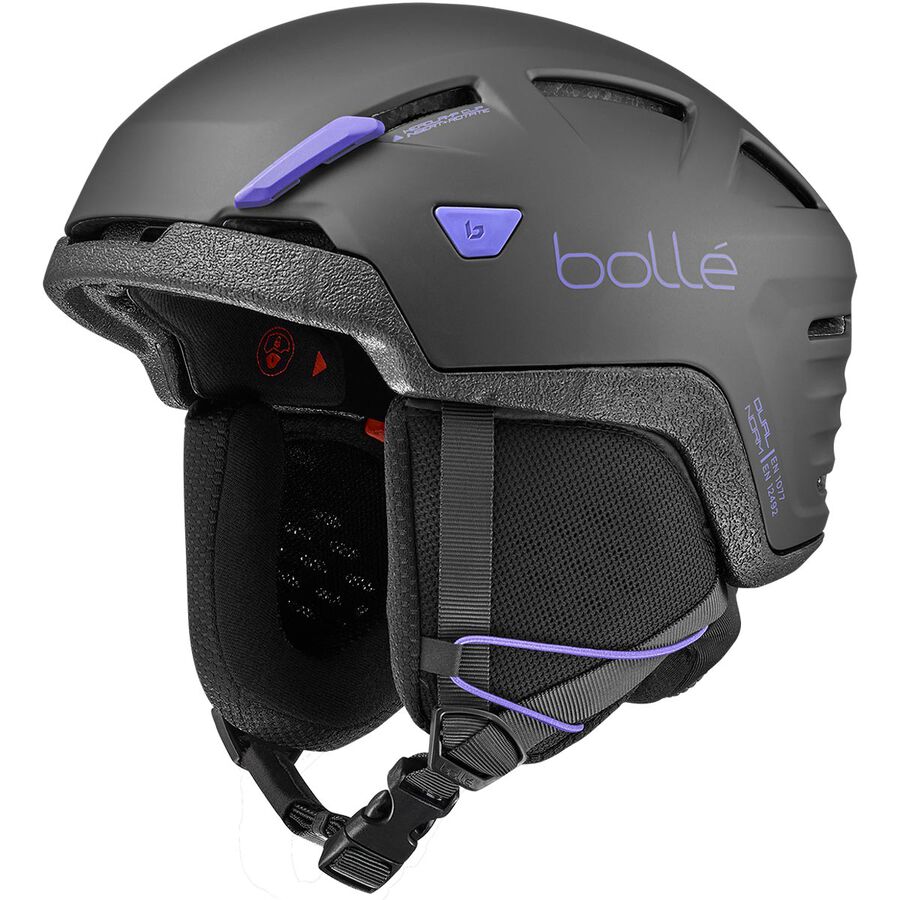
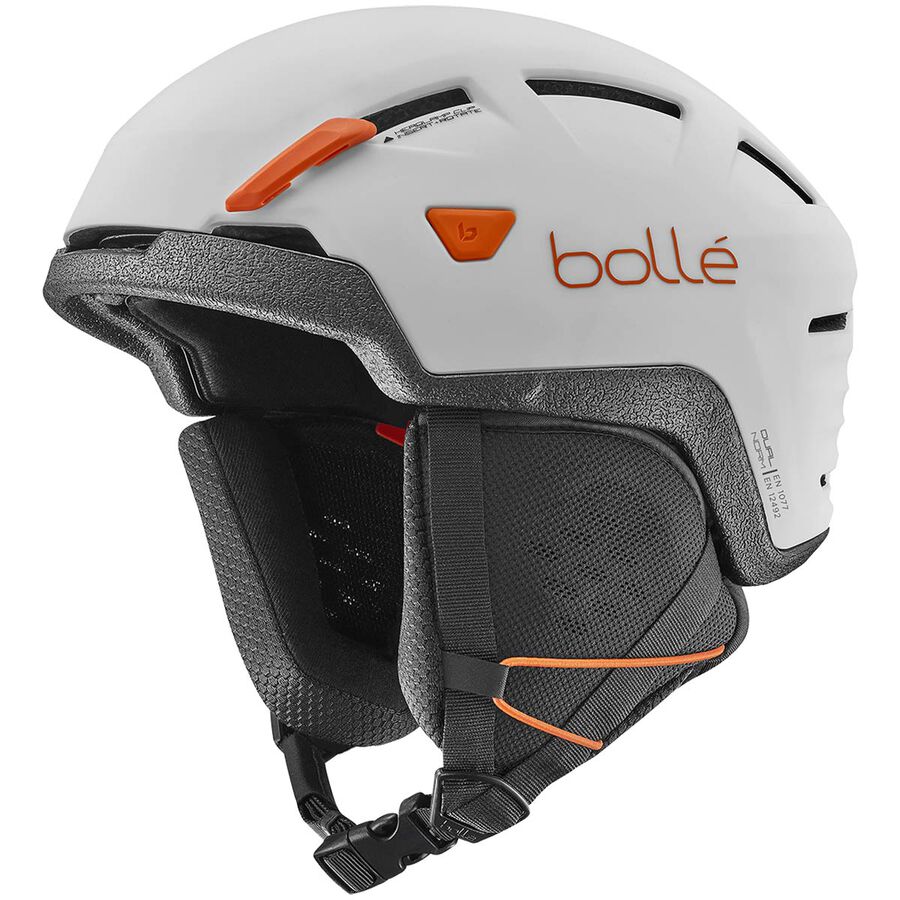
Hybrid helmets combine the characteristics of the two previous technologies. Hybrid helmets are therefore composed of an outer shell in ABS and a protective EPS foam underneath, as well as a lower part in In-Mold. This "mix" provides excellent protection and good resistance in the event of a big fall while ensuring the lightness of the helmet. The Ryft helmets are designed with hybrid technology to ensure lightness and world-class ventilation, while guaranteeing maximum safety.
Key features
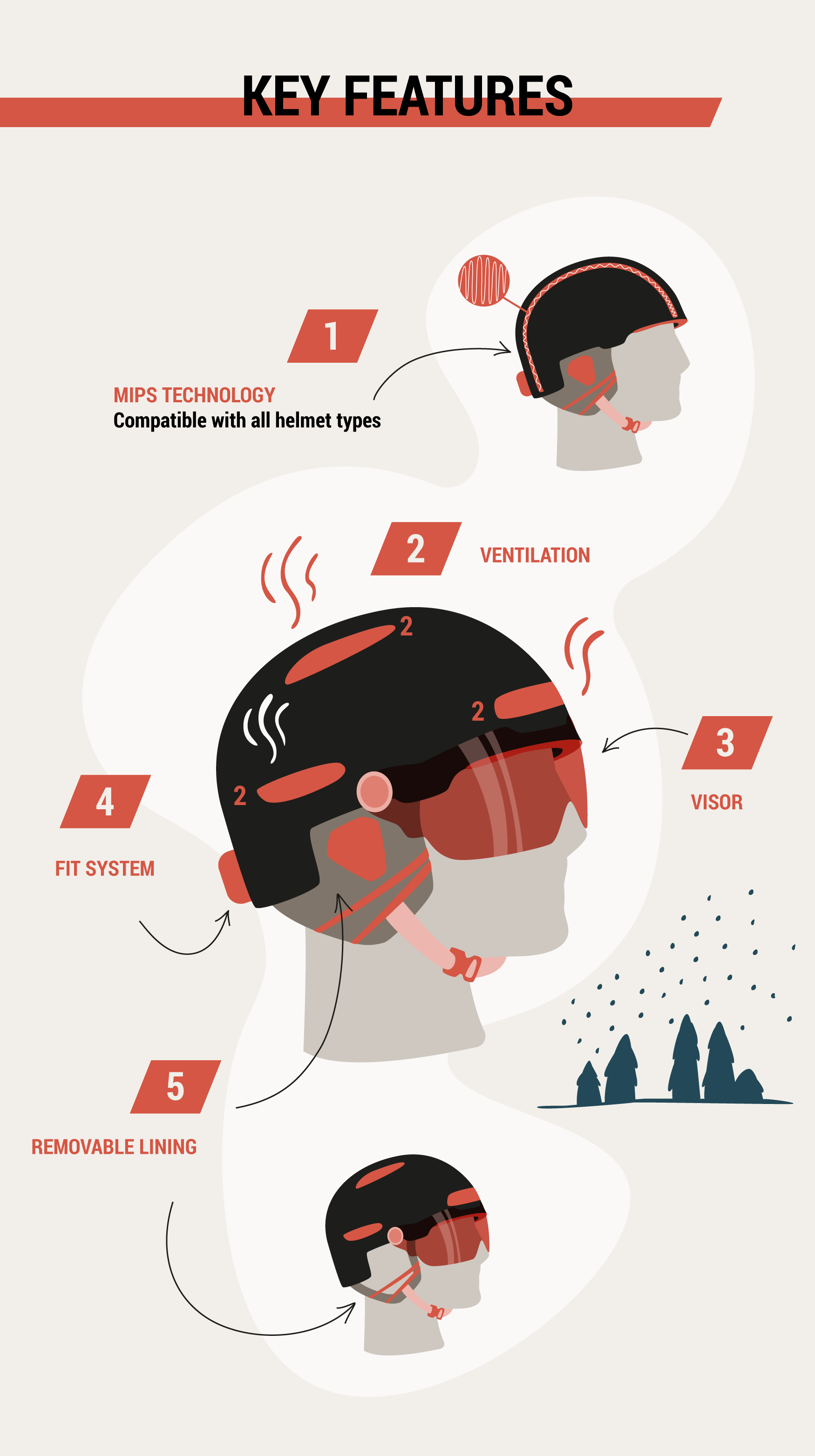
To help you choose your ski helmet, you can also look at the comfort features offered on each helmet: ventilation, size adjustment, chin strap, etc.
+ Ventilation
Being cold in your ski helmet is not pleasant, but being too hot is not either. In addition, excess heat leads to sweating and therefore to a feeling of cold afterwards. To avoid this, ventilation plays an important role. When buying a ski helmet, it is therefore important to check whether it has a good ventilation system.
Most helmets have a ventilation system, but the ideal is to be able to adjust this ventilation according to your effort and the temperature. In fact, in sun or bad weather, or depending on the altitude, conditions can change very quickly in the mountains. An adjustable ventilation system adjusts the air flow and thus controls the temperature under the helmet.
+ The visor
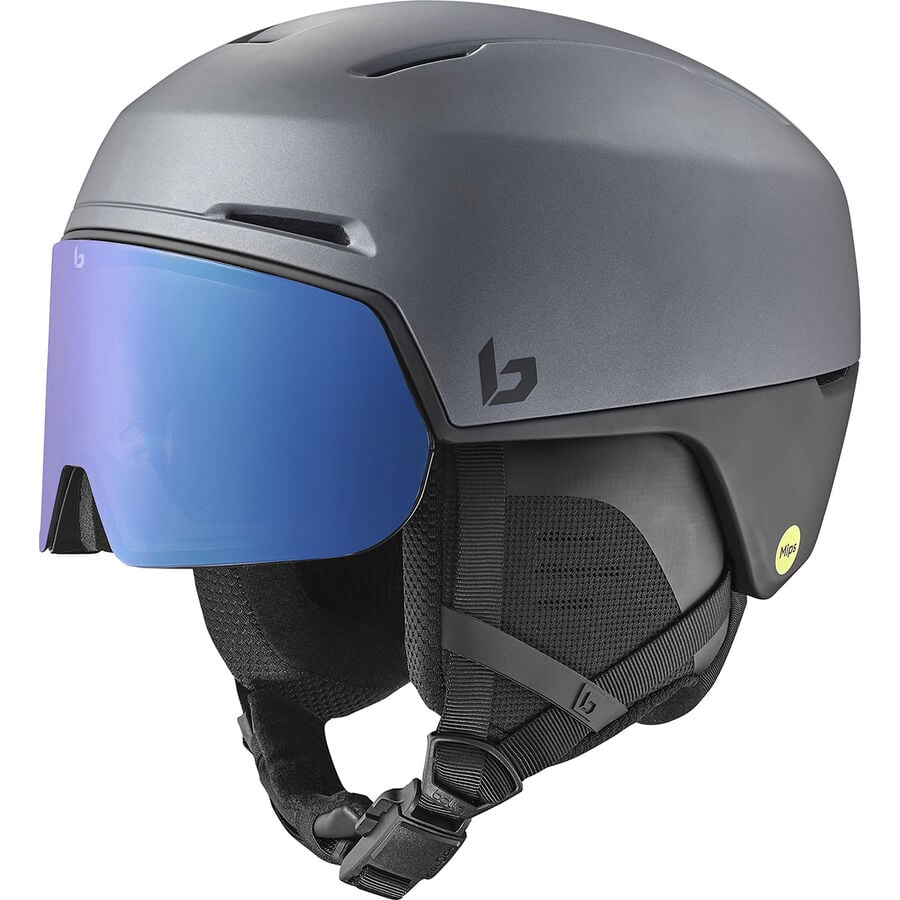
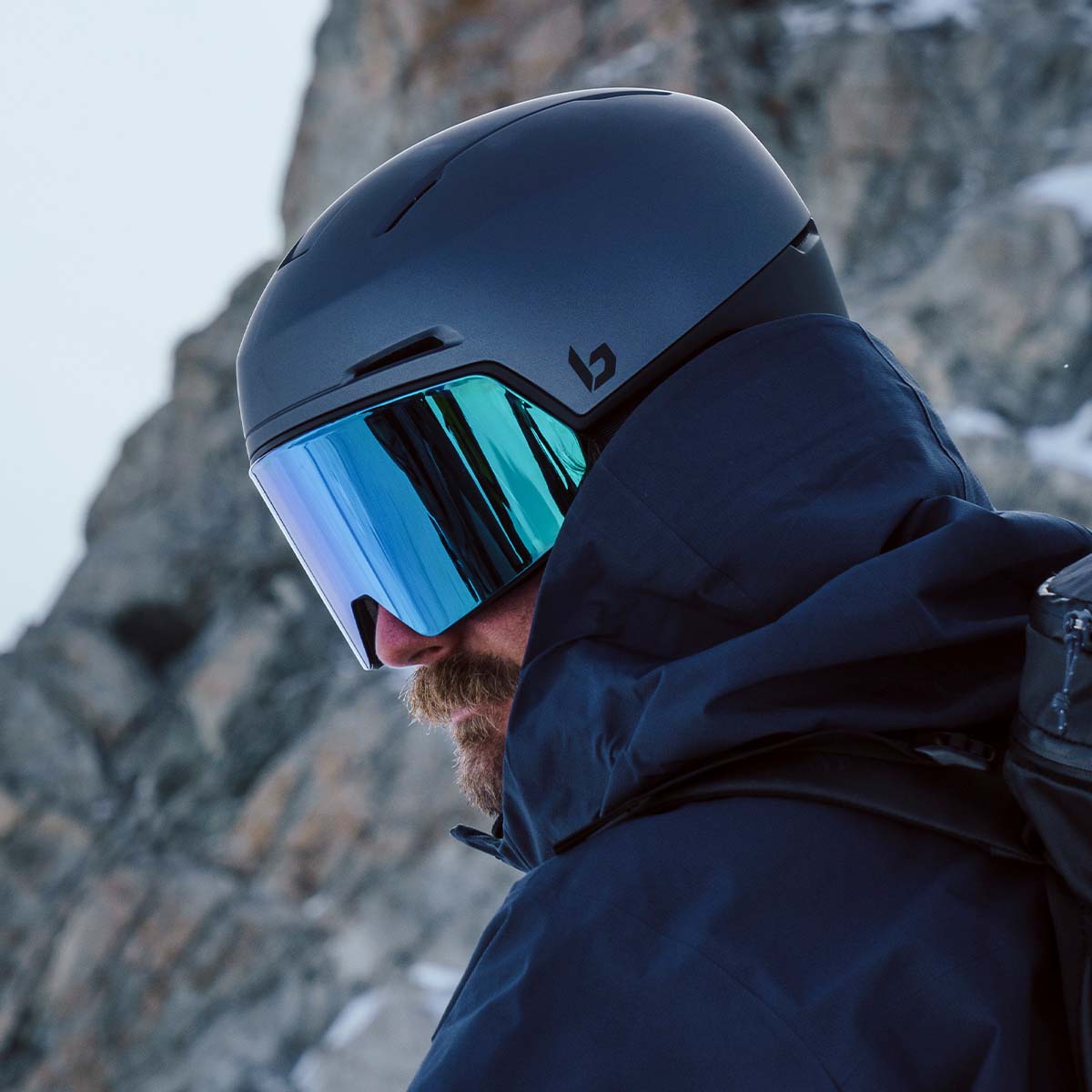
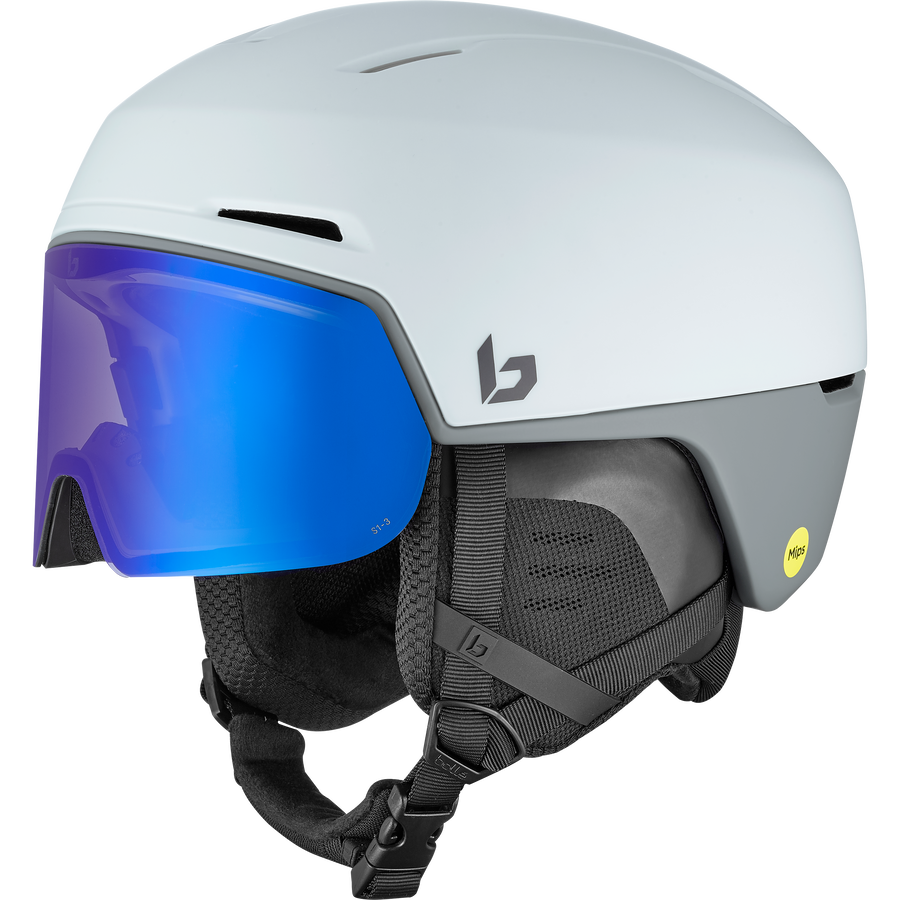
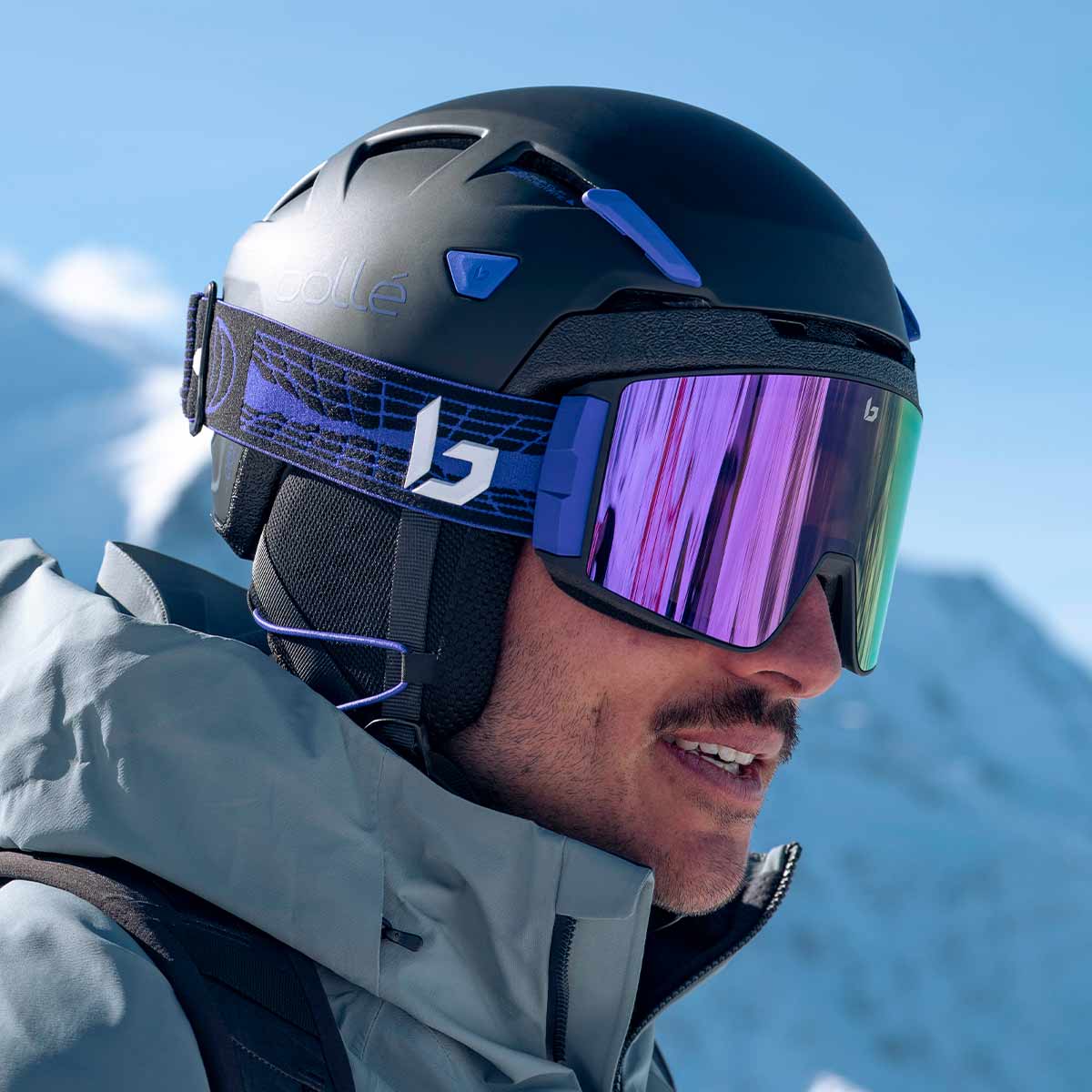
The visor is optional, but a visor ski helmet can be very practical. It protects your eyes from UV rays and eliminates the need to put on and take off your sunglasses or goggles depending on the sunlight. For those who wear prescription glasses, the visor can also prove useful. Finally, a visor protects the upper face from wind, snow and cold when conditions are difficult.
The most important criterion when purchasing a visor helmet is the screen technology. At Bollé, our visor helmets can be equipped with Volt high contrast enhanced colour or Phantom screen technologies.
Volt high contrast enhanced colour technology ensures:
- 100% UV protection;
- 30% more colour perception;
- enhanced depth perception;
- white balance maintained;
- high-performance polarisation.
Photochromic Phantom lens technology offers:
- 100% UV protection;
- a photochromic lens;
- optical clarity;
- anti-fog;
- excellent impact resistance.
+ MIPS technology
MIPS stands for "Multi-directional Impact Protection System". This technology helps limit the risk of brain injury, especially in oblique impacts, by absorbing rotational energy. To do this, MIPS helmets are composed of a lightweight polycarbonate shell, EPS protective foam and an In-Mold part.
+ The adjustment system
To fully enjoy your day in the mountains, having a properly adjusted helmet is essential. The helmet is usually adjusted by a dial placed on the back of the helmet, at the nape of the neck. The dial adjusts the tightness of the helmet according to the size of the head. All Bollé helmets come equipped with a Click-To-Fit™ or Boa® system, making sure your head is nice and secure.
+ Liners
Depending on the helmet, the liners may be removable. This detail can be very practical for the maintenance of your ski helmet: removable liners can be washed easily.
Picking the right helmet size
How to determine the right size of your ski helmet?
Most helmets come in three different sizes: S – M – L. Be careful, each helmet can have a different breakpoint for each size. To make it easy, we specify on all our product pages the size in centimetres corresponding to each helmet.
+ Measure your head circumference
If you order your helmet and can't try it on, you should measure your head circumference. Take a tape measure, place it on your forehead and go around your head, passing it 1 cm above the ears.
In doubt? Because we all have the right to change our mind, we have provided an easy return system so you can order with complete peace of mind.
+ Try on your ski helmet
To get your helmet right, you can proceed in 4 steps:
- Do you have a rather round or oval head? Depending on your head shape, you can already find the right helmet shape.
- Put the helmet on your head for a few minutes and make sure you don't feel any pressure points.
- Without fastening the chinstrap, tilt your head forward and to the sides and make sure the helmet stays in place on your head.
- Finally, make sure that the helmet reaches the middle of your forehead.
Downhill, freeride, touring: which helmet for which practice?
Depending on the discipline practised, you will not have the same needs or the same constraints. Here is what type of helmet to choose according to your discipline:
- Downhill skiing: a versatile, comfortable, ventilated helmet;
- Ski touring: an ultra-light and very ventilated helmet, mountaineering-style with many openings;
- Freeride (off-piste): a ventilated and light helmet;
- Freestyle: a reinforced helmet with an emphasis on safety;
- Competitive downhill skiing: a specific helmet, with rigid ear cups for maximum protection.
+ Safety standards
In order to guarantee your safety, your ski helmet must comply with the NF EN 1077 standard. This standard only concerns helmets for skiers and snowboarders. It distinguishes two different protection classes: class A and class B. Class A concerns ski helmets with removable ear cups, also called soft ears. Most helmets have removable ear cups because they are easier to put on and take off. Class B concerns ski helmets with rigid ear cups.
When should you change your ski helmet?
+ Your helmet is not damaged
Even if your helmet does not appear damaged or worn, it should be changed every 5 years because its components wear out. The EPS foam present in all helmet models and responsible for absorbing shocks could be altered and no longer fulfil its role in the event of a fall. So even a helmet that has not been impacted should be changed every 5 years to ensure your safety.
+ Your helmet has suffered an impact
If your helmet has suffered an impact as a result of a fall or collision, it will need to be changed. The EPS foam that protects your head is crushed to absorb the energy caused by the impact. However, this EPS foam does not reconstitute and does not return to its initial shape. In the event of a further impact, it will not be able to provide the same level of protection.
Good to know
Even when transporting or storing it, take care of your helmet. A fall on icy snow, on the tarmac of the ski resort car park or on the garage tiles can also damage your helmet.
How to maintain your ski helmet?
+ Between two days of skiing
Once the last run has been completed, you are tempted to put your helmet back in its protective cover and forget about it until the next day. However, it is better to let it dry to remove all traces of moisture (melted snow, sweat, etc.). This will prevent bad odours, extend its lifespan and make it all the more pleasant when you put it back on the next day.
+ At the end of the season
When winter ends, we recommend that you remove the removable foam parts and wash them. Let them dry before putting them back in place. You can also wipe the outside with a cloth before storing your ski helmet until next season. Store it away from heat sources and direct sunlight. Also take care to avoid any contact with hydrocarbons, paints and cleaning products.